Thursday, 30 January 2025

 Is DeepSeek AI a Blessing or a Curse for the Generative AI Industry?

By Richard Sebaggala


DeepSeek AI's entry into the generative AI race has sparked debate about what this means for the industry, competition, and the future of artificial intelligence. Some see it as a sign of progress, a force that will drive innovation and reduce costs. Others fear that this is another step towards an AI arms race that will take us further into uncharted territory where the risks outweigh the benefits. As economists, it is impossible to ignore the fact that this is not just a technological shift, but also an economic and geopolitical one. The big question is whether the arrival of DeepSeek AI is good for the world or whether we are simply moving towards a future that we haven’t fully thought through.

In most industries, competition is a force for good. It leads to better products, lower prices, and better accessibility. The emergence of DeepSeek AI challenges the dominance of OpenAI, Google DeepMind, and Anthropic and brings a new player into what is starting to feel like an exclusive club.  As Apple and Android went head-to-head, smartphones got better and more affordable. As budget airlines entered the market, flying became accessible to more people. DeepSeek AI could have a similar effect: AI tools are becoming cheaper, smarter, and more widely available. In addition, the accessibility of AI is a major concern. Currently, developing AI models at scale is costly, and access to leading technologies is often limited. If DeepSeek AI aggressively pushes into the market, it could force incumbents to rethink their pricing strategies and make AI more affordable for small businesses, researchers, and developing countries. This democratization of knowledge and computing power is a compelling argument for more competition.

However, more competition does not always lead to better results. It can lead to reckless behavior when companies prioritize speed over safety. The AI industry is already in the process of developing larger models without fully understanding their long-term implications. The entry of DeepSeek AI means that all players may feel pressured to accelerate their development cycles, which could lead to the use of unfinished technologies and the neglect of ethical considerations. The nature of the generative AI industry raises unique concerns. Unlike traditional markets, which typically involve the exchange of goods and services between buyers and sellers, the impact of AI extends far beyond consumers and businesses and can reshape entire economies, influence policy decisions, and change labor markets. This raises critical questions about how the market for AI will evolve, particularly in terms of its structure and competitive dynamics.

A key question is whether the emergence of DeepSeek AI signals the development of a truly contestable market or whether the industry will continue to be dominated by existing players. In economics, a contestable market refers to a market where entry and exit are relatively easy, meaning that new companies can challenge incumbents without major obstacles. In such markets, even a monopoly behaves competitively because the threat of potential entrants keeps prices fair and innovation high. In the AI industry, however, the presence of first-mover advantage —when early entrants establish a strong position by developing superior technologies, amassing big data, and building brand awareness — can solidify the control of existing giants such as OpenAI, Google DeepMind, and Anthropic.

DeepSeek AI’s strategy may be similar to OpenAI’s approach, which favors rapid adoption of its technology over immediate profitability. This is a common tactic in technology markets, where early market dominance can be more valuable in the long term than short-term revenue. However, the AI industry is characterized by network effects, i.e. the value of a service increases the more people use it. This and the huge demand for data and computing resources make it difficult for new entrants to compete on an equal footing with established market players who already have access to huge data sets, powerful computing infrastructure, and strong industry partnerships. The key question remains: Does DeepSeek AI’s entry signify a real power shift in the AI industry, where competition is thriving and innovation is flourishing? Or is the company merely adding another player to an already established system dominated by a few tech giants that are more likely to maintain the status quo than change it?

Furthermore, fragmentation is a significant risk. If AI development splits into competing ecosystems — one dominated by Western companies like OpenAI and Google, and another led by China’s DeepSeek AI and others — we could end up with two separate AI worlds. Competing AI ecosystems, possibly divided along geopolitical lines, could lead to different standards of safety, ethics, and governance. This is particularly worrying given that AI has the potential to disrupt economies and political systems. If AI development becomes a race for supremacy rather than a collaborative effort for global improvement, it could have detrimental consequences.

The presence of DeepSeek AI is therefore a double-edged sword. It offers the potential benefits of competition — faster innovation, better prices and improved access — but also carries the risks of fragmentation, reckless deployment and a focus on dominance rather than accountability. The key question is not whether DeepSeek AI is inherently good or bad, but whether we can effectively manage the impact of an industry that exceeds our ability to control it. AI is now about power, politics and economics. As history shows, those who set the rules for emerging technologies ultimately determine their impact on the world. We pray and hope that those governing AI will prioritize ethical responsibility, global cooperation, and the collective good over short-term gains and geopolitical rivalry. The future of AI should be shaped not only by competition but by wisdom and foresight.

Sunday, 19 January 2025

 A Green Park in a Polluted City: The Economics of Human-AI Collaboration


In an era characterized by artificial intelligence, thriving is no longer about competition, but about finding the right balance. Just as a green park thrives as a tranquil sanctuary in the midst of a polluted city, the partnership between humans and AI thrives on mutual reinforcement. Humans contribute judgment, creativity and context, while AI provides speed, data processing and efficiency. Together, they create something greater than either could achieve alone — a powerful synthesis of creativity and productivity.

But this partnership is not without risks. The misuse of AI has highlighted the dangers of unchecked technological progress. As Susie Alegre pointed out in her article "Don’t Count Out Human Writers in the Age of AI" (January 8, 2025), "academic publisher Wiley shut down 19 journals in 2024 in the face of a flood of fake scientific articles. To err is human, but falsification on an industrial scale is primarily a technological problem. AI has no professional ethics, no soul and nothing to lose — but the people who use it or ask others to use it for them do." This stark example underscores the need for human oversight to uphold ethical standards and protect the integrity of creative and academic work.

Maintaining integrity in a flood of content

The challenge for human authors and researchers is clear: they must maintain their individuality and integrity in a landscape increasingly dominated by AI-generated content. With the rising tide of machine-generated material, the temptation to rely solely on AI is growing. But much like a green park needs dedicated gardeners to maintain its vitality, the creative world needs human judgment and ethics to ensure authenticity and maintain trust.

AI may excel at generating content on a large scale, but it lacks the soul, professional ethics, and accountability that define human creativity. Without human guidance, AI can contribute to a landscape of superficiality, undermining the quality and depth that readers and audiences value.

The power of collaboration: examples of human ingenuity and AI

One of the most powerful aspects of AI is its ability to complement human ingenuity. When AI is used as a collaborator, it can contribute to better results by combining machine efficiency with human creativity.

Take, for example, a journalist working on a report about climate change. Traditionally, gathering data, interviewing experts and crafting a compelling story would typically be labor-intensive and time-consuming. With generative AI, the journalist can now streamline parts of the process while increasing the depth and creativity of their work.

·Data Collect and summarize: AI tools like Avidnote and ChatGPT can sift through hundreds of research articles, extract key statistics and summarize complex findings. This allows the journalist to focus on the most important findings instead of getting bogged down in data collection.

·Idea Generation and structuring: AI can suggest angles or topics for the article, e.g. the impact of climate change on urban flooding, innovative solutions in flood-prone areas and personal stories of resilience. These suggestions stimulate creativity and provide a solid starting point.

·Human Creativity and storytelling: Using AI-generated insights, the journalist weaves emotional narratives, conducts interviews and contextualizes data in a way that resonates with readers. The AI can suggest wording or sentence structures, but the journalist refines the language to fit their unique voice.

·Final Polishing: AI-powered tools like Avidnote help with grammar and readability, while the journalist ensures the content is ethically sound and factually correct.

The result is a thoroughly researched, emotionally engaging article that neither the journalist nor the AI could have achieved alone.

In academia, AI can also increase productivity while maintaining the intellectual rigor of the researcher. For example, a historian studying pre-colonial corruption could use AI to summarize historical texts and identify recurring themes. However, the historian’s expertise interprets these nuances, highlights lesser-known perspectives, and contributes original insights to the field.

The recognition of human expertise

While AI automates routine tasks, the unique contributions of human writers and researchers are increasingly valued. Clients and employers are beginning to understand that quality comes at a price. Whether it's writing compelling narratives, conducting insightful analysis or producing innovative research, human expertise is a premium service in a world inundated with machine-generated content.

Those who combine their unique talents with mastery of AI are leading this change. By using AI as a tool rather than a replacement, they are increasing their productivity and regaining their value. These people are redefining their industries and positioning themselves as indispensable in the age of AI.

A balanced path to the future

The future is not about AI versus humans. It's a story of collaboration. In the polluted landscape of overproduced and overwhelming  AI content, those who master and combine AI with their human skills shine as green parks of excellence. They elevate their work, stand out for their quality, and lead the way to a new era of creativity and productivity.

The lesson of 2025 is profound: the pen — guided by a human mind and augmented by AI — is more powerful than ever before. By embracing AI as an ally, human writers and researchers can amplify their strengths, maintain their authenticity, and push the boundaries of what is possible.

However, it is important to recognize that generative AI is still in its infancy and has significant limitations. One of its biggest weaknesses is its short memory — a limitation that is rooted in the Transformer architecture that drives these systems. This short memory is not a flaw, but an intentional feature, as current AI systems are designed to mimic human intelligence, not surpass it in every way.

But the exciting future still lies ahead. Efforts are already underway to develop AI that not only mirrors human intelligence, but also enhances it in ways that preserve and amplify what makes human thinking unique: our creativity, our ability to learn and adapt, and our capacity for deep understanding. Such advances could mark the beginning of a new chapter in which AI becomes a true partner for human innovation, allowing us to push the boundaries of what we can achieve while remaining deeply rooted in the essence of our humanity.

As we move forward, let us cultivate this balance between human ingenuity and technological advancement. In doing so, we not only increase our productivity and creativity, but also preserve the authenticity and ethical standards that define being human. In this balance lies the promise of a thriving, collaborative world where human excellence flourishes amidst the power of AI.

The future of creativity is not about replacing humans, but enhancing them — our ability to think, adapt and create in a way that matches both our intelligence and the technology we are developing. That's the promise of human-AI collaboration: a partnership where humans are at the center, leading with wisdom and purpose.

Monday, 13 January 2025

From Knowledge to Allocation: How Generative AI is Reshaping the Economics of Work and Learning

In today’s world, where information flows freely and tools like ChatGPT, Avidnote and Gemini are at our fingertips, we are experiencing a seismic shift in the way we approach work, learning and even daily tasks. The Economics of Work and Learning explores this relationship, focusing on how education systems and labor markets interact to shape economic productivity and individual career opportunities. As we look at how this dynamic is being changed by technology, it is important to understand its fundamental impact on personal and economic growth. What once required a high level of expertise-be it analyzing data, interpreting it or composing a professional email- is now streamlined and simplified by generative AI. For researchers, professionals and students, AI has transformed time-consuming processes into quick, manageable tasks, fundamentally changing the landscape of our economy.

Generative AI not only increases productivity, it also signals the transition from a knowledge economy to what I call an allocation economy. In the knowledge economy, success depended on how much information you could acquire and apply. Today, the focus is on how well you use and manage AI-driven resources to accomplish work. This shift suggests that the future of business and professional growth will revolve around resource management rather than pure knowledge acquisition. This shift aligns with the views of AI advocates such as Dan Shipper, co-founder and CEO of Every, who writes the Chain of Thought column. Shipper argues that the future of work depends less on the depth of individual knowledge and more on how effectively we manage the resources available. In this context, the most valuable skills of today or the future include navigating, selecting and orchestrating AI tools to turn ideas into reality.

In an allocation economy, the value of knowledge is shifting from the mere possession of information to the knowledge of how to use that information effectively with the help of AI tools. The real economic advantage is no longer in being an expert on every topic, but in integrating and allocating AI resources to achieve results efficiently. However, this does not mean that knowledge has lost its importance. Rather, it means a recalibration of priorities, where fundamental understanding is complemented by agile, strategic allocation capabilities. Generative AI tools enable users to apply their knowledge more broadly, achieving unprecedented levels of productivity and precision.

Preparing for the allocation economy

Resource management capabilities

With the variety of generative AI tools available today, the ability to evaluate and select the right tool for specific tasks is critical. Students, professionals and educational institutions need to develop a keen eye for resource allocation, prioritizing adaptability over rote learning.

Ethical and responsible use of AI

As AI becomes increasingly integrated into life and work, it is crucial to understand the ethical implications and learn to use AI responsibly. This includes recognizing bias, addressing privacy concerns and promoting transparency in the use of AI. In addition, individuals and organizations need to create frameworks that promote ethical AI practices in their operations.

Collaborative intelligence

AI tools work best when combined with the human mind. Communication, collaboration and critical thinking remain essential as humans interpret, refine and implement AI-generated insights. Educational institutions should focus on fostering these collaborative skills in students and professionals alike.

Continuous learning and adaptation

Generative AI is evolving rapidly. Continuous learning and constant updating of AI advancements are essential to realize the full potential of these tools. It is not only the responsibility of individuals, but also of companies to create an environment that supports continuous learning and adaptation.

A look into the future

As we move into the sharing economy, generative AI holds the potential to democratize productivity by providing tools that promote innovation and efficiency for individuals and companies,organization and professional bodies alike. The challenge is not only to adapt to these tools, but also to orchestrate them skillfully, i.e. to manage resources smartly to maximize impact.

As we embrace this change, the focus shifts from what we know to how we use and manage the resources available to us to build, create and innovate. This techno-economic transition signals a new era in which strategic resource allocation becomes the cornerstone of economic success.

The transition to an allocation economy driven requires a comprehensive assessment of the knowledge production landscape. Educational institutions, as well as individuals and professional organizations, must adapt by prioritizing resource management skills, ethical AI practices, and interdisciplinary collaboration. This shift is essential to ensure that educational and research paradigms remain relevant and effective in addressing the complexities and challenges of an evolving knowledge economy.

To succeed in this new environment, educational institutions must not only incorporate these elements into their curricula, but also foster a culture of continuous learning and adaptability. Individual professionals and their organizations must also be proactive in responding to these changes. By equipping the next generation with the necessary skills to navigate this allocative economy, we can cultivate a workforce that is not only proficient in the use of AI-driven tools, but also able to harness them for sustainable innovation and societal benefit.

Saturday, 28 December 2024

 Economics of cognitive labor: How generative AI is reshaping writing and thinking?

 By Sebaggala Richard


Imagine a tool that not only increases your writing speed by over 50%, but also improves the quality of your work. Recent studies, such as that by Doshi & Hauser (2023), have quantified this ability of generative AI (GenAI) and reported an 8-9% increase in creativity and a 26% improvement in writing quality. However, Lin (2023) points out that integrating GenAI into academic writing accelerates discovery and promotes scholarly diversity, raising concerns about reduced content diversity and potential dependencies. Furthermore, Inie et al. (2023) reflect on how applying GenAI in creative fields leads to a re-evaluation of creativity.

This article explores the transformative potential of GenAI in reshaping cognitive work, particularly in writing and thinking. It argues that GenAI significantly augments cognitive work by serving as an intellectual partner that complements and enhances human creativity and intellectual effort. This development goes beyond mere efficiency and ushers in a new era of cognitive collaboration in which writers and thinkers achieve unprecedented levels of creativity and analytical depth.

Cognitive labor, the mental effort associated with creating and thinking, is a crucial component of the knowledge economy. Economists such as Gary Becker and Richard Florida have emphasized the value of human capital -with cognitive skills being as important as physical labor during the Industrial Revolution. In journalism, academia, and research, fields where integrity and authenticity are paramount- there is a growing discourse on how GenAI could impact these traditional bastions of cognitive labor.

In his essay "Writes and Write-Nots"," Paul Graham articulates a widespread fear: that GenAI, by taking over much of the cognitive work, could hinder the development of critical thinking skills. This could lead to a divide in the economy between those who can engage deeply through writing and those who cannot. However, my experience and new scientific findings paint a more optimistic picture.

Over the past year, my interaction with GenAI has become more aligned with Dan Shipper's view in "Writing as a Way of Thinking," in which GenAI is seen not as undermining the writing process, but as enhancing it. GenAI helps break down the initial barrier of the 'blank page', offers new organizational strategies, and expands the pathways to idea development. GenAI tools such as ChatGPT, Avidnote and others enable the transformation of a raw concept into a well-crafted idea. By facilitating brainstorming with AI and refining thoughts into enriched outcomes, these tools greatly improve the clarity and depth of thought, resulting in a more rigorous and insightful intellectual process.

Furthermore, the economic concept of cognitive labor is critical here, as we explore how GenAI works similarly to the automation of physical labor-reducing the cognitive friction of repetitive tasks and allowing humans to focus on higher-order thinking. This is similar to the 'productivity paradox' in labor economics, where automation increases output without necessarily reducing the need for human expertise.

For authors, researchers, and academics, GenAI offers practical benefits that go beyond pure efficiency. It facilitates the delegation of preparatory or mundane aspects of cognitive tasks, enabling deeper analytical and creative engagement. Given the significant advances in AI technology, the future of cognitive work clearly lies not in obsolescence, but in change.

GenAI is redefining the boundaries of what constitutes creative and intellectual work, propelling the creative economy into a new phase of productivity and innovation. By thoughtfully integrating GenAI into our cognitive endeavors, we are improving our ability to think deeply and perform more complex intellectual work.

As we navigate the evolving landscape of the knowledge economy, it is clear that cognitive work is not disappearing, but adapting. Change is largely determined by the tools we adopt. Generative AI, if used wisely, has the potential to liberate our mental capacities so that we can focus on the most intellectually enriching and valuable parts of our work. This liberation allows for deeper analytical thinking and more creative problem-solving. As this technology advances, it promises to redefine the boundaries of cognitive work and lead the creative economy into a new phase of productivity and innovation. By thoughtfully integrating GenAI into our intellectual endeavors, we are not diminishing our ability to think deeply, we are enhancing it and paving the way for a richer and more complex intellectual landscape. Let us see GenAI not as a threat, but as a transformative ally in our pursuit of knowledge and creativity.

Tuesday, 12 November 2024

The Economics of Generative AI Adoption: The risks of hesitation

 By Sebaggala Richard


Generative AI is revolutionizing professional fields, from writing and marketing to data analysis and design. However, the main obstacle to widespread integration is not technical challenges or ethical concerns — it’s people's hesitation to embrace it. This hesitation goes beyond personal reservations and carries economic and professional risks that could see many fall behind in an era of AI-enhanced productivity. Inspired by Melanie Holly Pasch’s article "Generative AI Isn’t Coming for You—Your Reluctance to Adopt It Is," this article explores the real threat to our careers: not AI itself, but the reluctance to adopt it. This article explores the economic impact of resistance to AI and how this hesitation can impact careers and industries, more profoundly than the AI technology itself.

Many professionals are skeptical of generative AI, seeing it as a threat to their specialized skills and hard-earned expertise. This reaction is only natural. Pasch herself initially doubted that AI could replicate the creativity and precision of her work. Professionals who have honed their skills over the years fear that AI could turn their expertise into a commodity. This resistance stems from a psychological barrier known as the“sunk cost fallacy”— a tendency to cling to skills we’ve invested time in, making us resistant to tools that seem to diminish those skills. However, resistance to new tools like AI can lead to being left behind while others use these innovations to accelerate their careers.

For those who resist AI, the opportunity cost is significant. Forgoing generative AI can mean missing out on productivity gains and falling behind the competition. Think of a writer who spends hours refining a draft that AI could complete in minutes, giving them more time for creative or strategic work. This procrastination is not only a missed opportunity, but also a lost competitive advantage. In academia, for example, generative AI can streamline the traditionally time-consuming tasks of literature research and synthesis. Tools like Avidnote allow researchers to efficiently organize and summarize literature, enabling researchers to focus on interpretation and insights. As AI evolves from a niche tool to a fundamental expectation, professionals who resist it will not only miss out on productivity gains but could also find their skills becoming less relevant. Over time, this could lead to an obsolescence of the profession as AI-driven practices become the industry standard.

Generative AI has redefined expectations of efficiency and productivity. Today, it is no longer enough to do a task well. Professionals are expected to deliver faster and more innovative results. In this environment, adaptability is becoming a competitive advantage. Those who are willing to experiment with artificial intelligence not only gain efficiency and effectiveness, but also acquire skills that make them valuable assets in evolving work environments. Pasch’s own journey illustrates this shift. After embracing AI, she found that it did not replace her work, but enhanced it. Her adaptability expanded her expertise and allowed her to redefine her professional values.

A common misconception about AI is that it devalues human talent by making skills more accessible. On the contrary, AI increases professional value by taking over routine tasks and freeing up time for higher-value work. Pasch initially feared that AI would dilute her craft, but she later realized that it allows her to focus on strategic, high-impact tasks. AI allows professionals to raise standards and focus on creativity, strategy, and relationship-building-the elements that truly set individuals apart.

For those still hesitant to adopt AI, some practical strategies can ease the transition. Starting with small steps is an effective way to get used to AI. Using it initially for routine tasks such as generating ideas or summarizing documents will help you familiarize yourself with its capabilities. Another important factor is formulating specific prompts that will make for more relevant and impactful AI-generated content. Recently, I discovered that you can share your initial thoughts with ChatGPT on what you want it to do, then ask the same AI to refine and improve the prompt before executing it. The results are impressive, effectively bridging the gap between those who are skilled and those less confident in communicating with AI. This approach enables clearer, more effective interactions with the AI, enhancing the quality of responses for everyone. The mindset that AI is a helpful assistant rather than a replacement can also encourage professionals to use it to tackle smaller tasks or overcome writer’s block, freeing up time for more complex projects. Finally, do not use AI output “as is,” but consider it a starting point that can be refined and personalized so that the final product reflects your personal expertise.

The hesitation to adopt AI is not just an individual problem, but a general economic risk. Industries and individuals that are slow to integrate AI will struggle to remain globally competitive. As productivity and growth increasingly depend on AI integration, resistance could hinder progress in sectors and economies already struggling with global competition. Adaptability to AI will be critical to economic resilience. As AI technology evolves, expectations for workers, industries, and economies will change. Those who adapt to AI could gain a competitive advantage, while those who resist risk being left behind.

Generative AI is not here to replace jobs but to augment human talent and eliminate inefficiencies. The economic impact of using AI goes beyond personal productivity and affects the competitiveness and survival of the entire human production chain. Using AI means using tools that reduce routine work and allow individuals and organizations to devote time and resources to high-impact, strategic initiatives. This transition opens up opportunities for innovation, skills development, and economic growth that can be transformative at every level —individual, organizational, and societal.

Hesitation to adopt AI comes at an economic cost by slowing productivity gains and reducing competitiveness. Regions, industries, and professionals that resist AI lose out on immediate efficiencies and miss out on the economic benefits that AI will bring over time. As more professionals and organizations integrate AI into their workflows, those who adopt it earlier can gain a first-mover advantage and establish themselves as leaders in their field. Early adopters are often better positioned to innovate, adapt to changing demands, and capitalize on the growing AI-driven economy.

The economics of AI adoption illustrate a broader principle: in an environment where technology is rapidly evolving, adaptability is no longer optional — it’s essential. The economic landscape is increasingly shaped by technological capabilities, and AI has set a new standard for what is achievable in terms of speed, depth, and scalability. By using generative AI, professionals can reduce costs, increase output, and improve the quality of their work, driving growth and resilience.

Pasch’s experience shows that the shift from resilience to adaptability allows us to redefine professional value, unlock new levels of productivity, and open doors to creative and strategic activities that were previously limited by time. Ultimately, the economics of AI adoption show that it is not just a tool to maintain relevance, but an investment in future productivity and competitive advantage. Generative AI is here to multiply opportunities and enable individuals and organizations to drive growth, innovation, and economic resilience in a fast-paced, technology-driven world.

Friday, 8 November 2024

Efficiency Trumps Nostalgia: Why AI-Enhanced Search is Not the "Death of Search"

By Sebaggala Richard


For those who are not yet familiar with generative AI, l will first provide a brief overview. Since the launch of ChatGPT in November 2022, the landscape of online information has changed dramatically. Generative AI tools such as ChatGPT are designed to generate human-like responses based on large amounts of training data. Initially, critics pointed out that these tools lacked real-time information and instead relied on static, pre-existing data, occasionally leading to what experts call “hallucinations" - moments where the AI generated inaccurate or outdated responses on newer topics. However, recent advances from companies such as OpenAI, Perplexity and Google have begun to address these limitations by integrating real-time search capabilities into their AI systems.

I was inspired to write this article after reading Matteo Wong's recent article "The Death of Search"," in which he addresses a sense of nostalgia — an emotional longing for the past — that some feel towards traditional search methods. Wong's article reflects a longing for the familiar process of trawling through pages of links and information, where users were in control of their search rather than having answers instantly curated by an AI. But is this move away from traditional search really a loss, or could it be seen as an overdue improvement that will help us become more efficient and cognitively empowered?


Steve Jobs famously likened computers to “bicycles for our minds",” tools that amplify our natural abilities (Markoff, 2011). Taking this metaphor further, AI could be seen as a “jet engine” for our minds, propelling us beyond the limits of our cognitive abilities. Whereas traditional search required a lot of mental energy to sift through links and refine keywords, AI-powered search engines streamline this journey, allowing us to access synthesized, relevant information almost instantaneously. Rather than lament the transition, we should recognize that AI elevates the concept of search to a higher level of cognitive empowerment.

From an economic perspective, search is not dying, it is evolving. This change is a well-known phenomenon of technological progress, comparable to the transition from slide rules to calculators. Just as calculators simplified arithmetic, AI search tools optimize information retrieval and allow users to focus on knowledge rather than information retrieval. Efficiency is a resource, and AI-powered search engines maximize its value by reducing redundant tasks and enabling deeper engagement with relevant data. Those who mourn traditional search are overlooking the greater potential that AI brings: Users can invest their time in critical thinking, analysis and innovation.

Indeed, AI-powered search mirrors the natural evolution of efficiency in our digital age. Every technological advance, from calculators to statistical software, has sparked similar fears of "loss," but these tools have consistently allowed users to move from mundane tasks to more meaningful pursuits. Calculators have not "killed" math, they have enhanced it. Similarly, AI-driven search doesn’t "kill" search, it optimizes it and provides a richer, results-driven experience. Why should we resist this development when it allows us to work smarter, not harder?

Wong’s article suggests that traditional search, with its search for keywords and lists of links, held intrinsic value. But this view holds to a process, not an outcome. AI search engines curate information with unprecedented precision, allowing users to bypass irrelevant links and go straight to what they need. This change does not mean that we are losing access to knowledge, but that we are accessing it more efficiently.

Let’s also tackle the notion that AI is a "replacement" for discovery. When calculators became indispensable, we didn’t mourn the loss of slide rules — we celebrated the new ease and accuracy they brought us. In the same way, AI search enables users to engage with knowledge, not replace it. The idea that efficiently delivered information has no value just because it’s fast is false; instead, it’s a testament to AI’s ability to serve us better.

In an age information overload, AI-driven search is essential. The economics of efficiency teaches us that our resources, especially time and cognitive energy, are finite. Why shouldn't we embrace a tool that helps us make the most of them? We should see the rise of AI-powered search not as the "death" of an old system, but as the birth of a smarter, more effective system.   To see how these AI advancements are improving our daily information handling, here are practical examples of how AI-powered search tools like ChatGPT are streamlining tasks and empowering users.

Efficiency in information retrieval and research: Traditional search engines require sifting through countless links, but AI-powered search can deliver summarized answers directly. For students and researchers, AI search tools like ChatGPT provide instant summaries and explanations, making research a more analytical, less repetitive process.

Personalized and real-time Assistance: AI search tools with features like real-time data access and personalized help make learning adaptable. Users can ask ChatGPT to explain new concepts or retrieve up-to-date information such as news or stock prices, simplifying knowledge acquisition and improving decision-making.

These examples show that AI-driven search not only increases efficiency, but also changes the way we interact with information, allowing us to focus on deeper insights and applications.

In conclusion, while I approach the future of AI with measured optimism, recent advancements offer the most compelling glimpse yet into what may lie ahead.The rapid refinement of these tools shows us how transformative AI can be, not just for routine tasks, but for reshaping entire fields, from research to education. For those who have not yet embraced these tools, now is the time. Early adopters will gain a significant advantage, and those who hesitate will find it increasingly difficult to keep up. In a world where technological inequality often separates the developed from the developing world, the widespread adoption of AI is not just about progress, but also about equity. By encouraging early and widespread adoption, we can help bridge this technological divide and create more equal opportunities. By harnessing the potential of AI now, we can all move towards a more connected, informed and empowered future.

Tuesday, 5 November 2024

 Economics of choice: Generative AI anxiety and Choice Overload

By Sebaggala Richard


Over the past six months, I have had the opportunity to promote the use of generative AI (GenAI) to researchers and students across Africa, introducing platforms such as Avidnote, ChatGPT, Elicit, Gemini and others. These tools are transforming research and learning. They offer features that can streamline literature reviews, enhance collaborative research and even automate aspects of data analysis and writing. Yet despite the transformative power of GenAI, I have noticed that many people, even those expected to be tech-savvy—students, academic staff and professionals at universities— have little familiarity with the wide range of  GenAI tools now available.

This lack of familiarity is not due to indifference. Rather, it is due to a mixture of AI anxiety and a feeling of being overwhelmed by the sheer number of tools available to choose from. Generative AI is developing at an astonishing rate. New applications appear almost daily, each with unique capabilities, price points and skill requirements. This rapid development creates a landscape of "choice overload," where the sheer number of options can lead to confusion, hesitation and ultimately inaction.   As I thought about this, I was reminded of the economics of choice, a field that examines how we make decisions when faced with a multitude of options — and the emotional and cognitive impact of too many choices. Understanding this concept is essential if we are to effectively combat the fears associated with the adoption  of GenAI.

The economics of choice and the Jam study

In the field of behavioral economics, one of the most illustrative studies on choice overload is the Jam Study (2000) by Sheena Iyengar and Mark Lepper; When choice is demotivating: Can one desire too much of a good thing? In this experiment, the researchers presented shoppers with two different displays of jam: one with 24 options and one with just six. Although more people were attracted to the large display, fewer people made purchases than those who were presented with only six options. This study illustrates a paradox: more options attract us, but they also lead to decision paralysis, which decreases our satisfaction and increases the likelihood that we will abandon the decision altogether.

Today’s GenAI landscape mirrors the Jam study on a much larger scale. GenAI tools promise endless possibilities — from boosting productivity to revolutionizing education. But for new users, choosing between a dozen tools that all seem to perform similar functions can feel as overwhelming as looking at a wall full of jam jars. This overabundance often leads to GenAI anxiety, where users, especially in developing regions, feel paralyzed by choice and afraid of missing out on the “perfect” tool.

Choice Overload and AI anxiety

Anxiety surrounding new technologies is not unique to artificial intelligence. Throughout history, every technological wave has brought with it a mixture of excitement and trepidation. From the printing press to the Industrial Revolution to the advent of the internet, humanity has often felt uneasy about the rapid changes these technologies bring. However, while previous advances primarily impacted mechanical or technical aspects of life — such as the efficiency of production or information processing — AI is attacking something much more profound: human intelligence itself.

Unlike previous innovations, GenAI, for example, doesn’t just automate physical tasks or process data faster. It emulates and improves cognitive tasks such as understanding language, generating creative content and even making recommendations based on user input. This interaction with human intelligence adds a layer of complexity and personal relevance that can increase anxiety.

Furthermore, the speed at which GenAI is evolving is unprecedented. When ChatGPT was launched in November 2022, it marked a milestone in public AI participation. Since then, the scale of GenAI applications has expanded at an astonishing pace, with new tools, features and integrations emerging almost daily. This rapid pace has heightened anxiety about AI, especially in developing regions where access to training and resources can be limited. It’s not just about getting used to new machines or a faster computer, but about coming to grips with an evolving ecosystem of tools that have far-reaching implications for research, business and even personal decision-making.

In developing regions, the fear of GenAI is compounded by unique contextual challenges. A digital divide, limited technical support and budget constraints make it difficult for users to freely explore and adopt new AI technologies. Many researchers and students I’ve spoken to feel intimidated when it comes to AI — not only because they are unfamiliar with the technology, but also for fear of choosing the "wrong" tool. This fear is compounded when you consider how much time and money required to subscribe to familiarize yourself with these tools. The misconceptions people have about generative AI, along with ethical challenges such as plagiarism, biases, and hallucinations (incorrect or misleading results that AI models generate), often create confusion around the technology's reliability and ethical use.

Imagine a postgraduate student in Africa who wants to use GenAI for their research. They may have heard of tools like ChatGPT for generating text, Avidnote for collaborative writing, Elicit for synthesizing research findings and Gemini for image creation. But each of these tools has its own learning curve, skill requirements and subscription costs. Without clear guidance, a student can easily become overwhelmed and not know where to start or which tool is most useful for their work. This sense of paralysis—of being overwhelmed by choice — inhibits the adoption of GenAI and prevents users from fully realizing the transformative potential that generative AI offers for research and innovation.

In the context of developing regions, this combination of choice overload and fear is not just a minor inconvenience, but a significant barrier to progress. By addressing these challenges thoughtfully and providing targeted support, we can pave the way for greater adoption of GenAI and ultimately enable users to harness the full potential of this revolutionary technology

Practical lessons for tackling choice overload

To counteract choice overload, we can be guided by a few economic principles. One of these is the concept of opportunity cost — the realization that every decision involves a trade-off. In the context of GenAI, this means that we recognize that choosing one particular tool may mean forgoing another. Instead, it can be an opportunity to focus on tools that provide the most immediate benefit and set aside more complex options for later exploration.

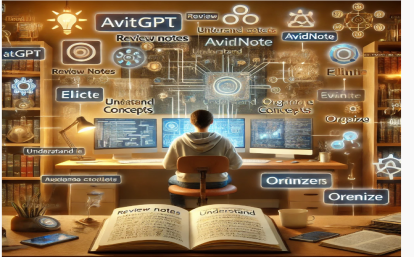
For many of the individuals and organizations I advise, I start with a simple, effective strategy: list the tasks that take up the most of your time. If you’re a student, this might be reviewing class notes, grasping complex concepts, or organizing study materials. If you’re a researcher, it might mean identifying the most time-consuming aspects of research, such as summarizing literature, managing citations, or analyzing data. Once these tasks are identified, we can explore how GenAI can help streamline them. By starting with specific, time-intensive tasks, users can develop an understanding of GenAI’s capabilities and gradually acquire the skills they need to use these tools effectively.

This targeted approach aligns well with the Jam study's findings: narrowing the scope and focusing on immediate, high-impact solutions can help users navigate the overwhelming landscape of AI options. For example, a small business owner could start by implementing a single AI-powered planning tool that offers clear benefits without being overly complex. This approach allows them to experience the benefits of GenAI in a manageable way before moving on to more advanced applications.

Another useful strategy, inspired by the Harvard Business Review, is to focus on the problem, not the tool. Before choosing an GenAI platform, I advise users to identify their most pressing challenge. For example, a researcher might have trouble managing citations, while a student might need help understanding dense study materials. By starting with a concrete problem, you can avoid the distraction of endless features and instead focus on an AI application that provides an immediate, practical benefit.

Conclusion

In order for GenAI to realize its full potential in developing regions, simplifying the adoption process is crucial. Universities and organizations could put together “starter” toolkits tailored to specific use cases, such as research or small business management, so that users can experiment more easily without feeling overwhelmed. training, peer to peer support from those who have gained the AI competences, guided introductions, and local tech support would also go a long way towards reducing the fear of GenAI and helping users gain confidence and competence in using these tools.

In summary, the economics of choice teaches us that while options can be empowering, too many choices can also discourage decision-making and leave potential untapped. As the GenAI landscape continues to expand, developing a mindful, problem-centered approach to tool selection will allow us to overcome choice overload, tackle the fear of AI head-on, and make GenAI a powerful ally in economic development in Africa.